This question came in a couple of weeks ago from an old college friend while Liz and I were on the road to Oberlin, OH to record my current favorite band, Backbone. (Sorry it’s taken me a while to respond Chris, but I really do appreciate the question.)

“Lilli,
As long as I’ve known you, you have been very talented and knowledgeable about music. I’m wondering about the back-story about what lit this flame in your life. Was it love at first sight when your parents let you hammer on a piano at church one day? Did you have traditional music lessons growing up, or were you more self-taught?

Speaking as someone who took years of lessons on Saxophone, Piano and voice, but still has very little musical knowledge, per se, your skills have always been a bit of an enigma to me.
-Chris”

I think I’ll have to answer this one in installments since my road has been kinda weird and “bendy” as roads go.

CHAPTER 1: AIR PIANO, OPUS 1

In truth, my musical journey has been a little bit of a mystery to me, too. I think my mom would tell you I was born to music. She has her favorite stories about music in my childhood, many of which I remember myself. For example, I remember hearing music in my head all the time, I mean ALL the time. One day, I just couldn’t take it anymore so I dragged the entire family into the living room (which had a white carpet and was only used for special occasions) for a “recital” of all of this music in my head. We didn’t have a piano at this time, but that didn’t stop me. I proceeded to play air-piano for what must have been an embarrassingly long time, because at some point everyone started clapping and telling me what a great job I’d done. “But I’m not finished yet!” I wailed as I demanded that they all sit back down until the final cadence. I was three.

As Chris guessed in his question, church also played a significant role during this time. For starters, church was where I discovered a thirst for harmony. See, my father was a preacher in an old Baptist church that had a habit of singing all these old, haunting melodies. While everyone was singing these songs by heart (or blood maybe?), I would try to figure out what the titles were and look them up in the index. Once I found the page, I instinctively knew they were all singing what was on the top line, so I started trying to sing the other lines. If the dots were close to each other I’d sing as if I were singing a scale. If the notes had space between them, I’d make a large or small “jump” to another note that also “sounded right.”

Since my father was the preacher, we were always the last to leave. That meant, if I wasn’t too disruptive, I could play the church piano after the service. I had a ritual that involved sitting on the bench, playing one note at a time and leaning in to the piano so that I could hear “how that note went.” I listened to the attack, the decay, and even the tinny, pitched vibration the string would make right before it stopped “singing.” When I felt I’d studied one note long enough, I’d move on to the next note. Same thing, every Sunday.

We got our own piano shortly after the “air recital” incident, but it was technically for my sister who was three years my senior and taking piano lessons at school. Even though I couldn’t read music, I promptly learned to play by ear everything she learned from her books, sometimes adding my own embellishments because “I liked my way better.”

That same year I learned that my mom had taken music lessons as a child. She hated them of course, even purposely broke her wrist to get out of her piano study, but that didn’t phase me a bit. I assumed she must have known something of music notation, so I started harassing her about transcribing my own compositions incidentally entitled things like “Raindrops” and “Falling Leaves.” Her etchings on the homemade manuscript paper looked like magical hieroglyphics to me, and I’d spend quite a bit of time trying to decipher them, matching what I played to what was written on the page.

By the time I was four, my mother started trying to find a teacher for me. No one would take me. I was too young. I think I was 5 years old when I auditioned for Vera Weaver, my first piano teacher. Thus began my illustrious career as a completely unremarkable music student.

If you’re wondering why I’m spending so much time on pre-school years, it’s because, in spite of few blazing moments of pure joy and ecstatic fervor, the next 20 years of my musical career was kind of a downer. It involved losing teacher after teacher to one circumstance or another (usually financial), me trying to compensate for that through self-teaching with minimal success, and the humiliation of ending up at a boarding school full of kids who had grown up with a first-class musical education. More on that in the next installment….

This is all to say I honestly can’t remember a time when organized sound didn’t completely fascinate me, and I can remember pretty far back. Basically, I was a sickly, nerdy kid who wasn’t good at much and mainly annoyed everyone around me with precocious questions and general condescending manner. So music was my first best friend, plain and simple. I came into the world with a sincere affinity for all things musical. I can’t say that gift came with any particular talent per se, but it did put a deep and rich passion for music right at the center of everything I knew how to care about from my first day forth.

End of Part I
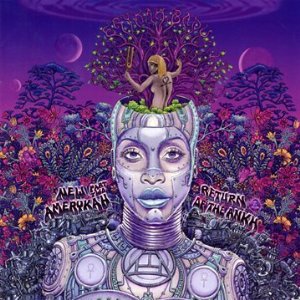
I’ll use BLOG BLURBS to document random conversations on music new and old. Here’s the latest from a friend who knows that Erykah Badu is my #1 favorite R&B artist.

Melony: The New Badu… ya dig?

Me: You know, to be honest Mel, I haven’t really gotten in to it yet. I bought it back in April and listened to it right away, and my first impression was that it was the 2nd album everyone would have expected/wanted. It hasn’t really grown on me yet…but that could be because the first time I listened to it I was with a bunch of classic rockers (i.e. The Shiz) and none of them were really into…you know how that can color an experience… How ’bout you?

Melony: The first time I listened to it, it was more ambient noise in the background of having some people over. I really enjoyed it. Last night was the first time I listened to it without anything else going on and I wasn’t as in love with it. It makes sense with the first album… but it’s just not giving me the sauce I’d expect.

Me: I think as ambient noise it would be hot…just right for the vibe-y sophisticate….but less intriguing when it’s just me and her in the room.

Anybody else have this album?

WDYT?

Album Art: Erykah Badu - New Amerykah Part Two: Return of the Ankh

OMG.

Of course I should’ve counted on Sofi for the first question – and I should have known it would have been so completely perfect.  That she would choose to invoke a great work of inspired genius released merely two days after my mother’s birthday in the year of my birth…well, that’s just Sofi.

and I quote:

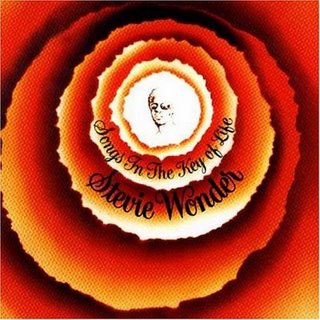
“I’ve recently started listening to Stevie Wonder’s “Songs in the Key of Life.” I knew a lot of the songs before, but I didn’t realize they were all on one album, *and* with such awesome new material I’d never heard before!

So what I’m curious about is, What was the reaction when this came out? Did it make everyone’s head explode? What was so groundbreaking and revolutionary about it? And do you have anything to say about how it influenced musicians to come? We generally hear African-American artists credit him, but I hear Pink Floyd and stuff like that coming out of this, too. All the trippy synthesizers and stuff.

Sincerely,
Sof’s in Need of Love Today”

Well, Sof, by all accounts, this album did indeed blow people’s minds. We have to remember that at this point, Stevie had taken home two consecutive Grammy Awards for Album of the Year for his previous two releases Innervisions and Fulfillingness’ First Finale, and the one before that (also a top 5 hit) was TALKING BOOK! (I’m just saying…) In 1976 when Paul Simon took the same prize, I think he actually thanked Stevie Wonder for not releasing an album that year.

The Stevie machine had built up quite a frenzy at that point. His language had evolved into an almost unheard of combination of harmony and rhythm that was as sophisticated at is was accessible. He was feeding pop listeners the best of what American music had to offer and for a brief time in our history, the people were feasting!

That being said, instead of resting on the laurels of his obvious dominance as a thread in the weird fabric of pop-dom, Stevie took “Key of Life” far beyond anyone’s imaginings. It’s my understanding that he’d wanted to leave the music industry before this project began to work with disabled children in Africa. A noble cause indeed, but something changed his mind… It’s obvious to me that if that kind of genius was still lingering in the mind of any artist, it would be impossible to leave that work unsung for any reason. I guess what I’m saying is, it feels like Stevie’s inside parts was saying “I’m tired of holding back. You think I’ve done something great before and I’ve barely even scratched the surface. I’ve got other work to do here people. I’ll show you the truth, but just this once, and then I’m outta here.” I’m not saying he never did anything great after this project, but “Key of Life” is a gi-normous opus. I imagine that for many, trying to release an album in its aftermath was a lot like Europe trying to write a Symphony after Beethoven’s 9th.

I think the most “groundbreaking and revolutionary thing about it” was just how frigging awesome every offering on that album is. It actually delivers. When you listen to it, you can’t believe all of those amazing songs came from one person – and it’s not even a “Greatest Hits” album! I think it was easy to take his great songs for granted before this one, but on “Key of Life,” Stevie truly revealed himself as a composer, writer and producer.

As a producer, he pulled together over 130 musicians for this project, and came up with something monumentally compelling and cohesive. Accounts of these sessions make him sound like a one man Steely Dan. And Stevie’s compositional prowess must never be underestimated. (Have you ever heard his “Journey Through the Secret Life of Plants?”) Now, I don’t know who his direct influences were for some of the more “progressive” elements on the project, but I know Pink Floyd’s “The Wall” didn’t come out until 1979. For me Stevie reveals that, contrary to popular belief, in order to be as consistent as he was at producing GREAT songs, you have to have access to an active intellect that can follow and keep up with the muse, wherever she might lead.

It’s certainly not just African American artists that recognize his imprint. Elton John said to Rolling Stone, “Let me put it this way: wherever I go in the world, I always take a copy of Songs in the Key of Life. For me, it’s the best album ever made, and I’m always left in awe after I listen to it.” Don’t let the blind ignorance of a deceptively uni-dimensional, monochromatic industry fool you. Whatever your opinion of “I Just Called to Say I Love You,” Stevie and his cannon are as universally significant to our musical landscape as Louis Armstrong. Revolutionary, brilliant, masterful, radiant. Aside from proving to an sometimes treacherous international house of mediocrity that unabashed awesomeness was both possible and commercially viable, “Songs in the Key of Life” was a great gift to the human experience, as great a gift as any person could hope to offer.

WDYT?

http://en.wikipedia.org/wiki/Songs_in_the_Key_of_Life

Stevie Wonder: Songs in the Key of Life

Ok, so I’m not gonna draw this out.  My beautiful mom recently had the idea that I might get some pleasure out of writing about music, and even more so if I found a way to include others.  My wonderful Mama Bear said I should do it “because of my beautiful life.”  So here it is, my very own Life and Music Corner, finally open for business.

See, for years I’ve had people calling me at all hours of the night, asking me questions about music like “what is that time signature in Bobby McFerrin’s ‘Stars’ from Hush” or “what makes that chord progression in the Fauré piano quartet so magical?!?!”  I wish I could say they ask me because they think I’m smart, but I know deep down it’s because they know in their bones that music is my obsession, and that I’ll satisfy their curiosity because they know I’ll find everything that catches their attention worth a little (or a lot) of my own.

See, I loooove music.  Former students of mine have reported they think I couldn’t live without it.  My nephew used to plead with me when I’d begin my daily practice, “please auntie…please don’t go into the vortex!!!!” (insert wavy scooby-doo arms).  But this love is something I’ve always taken for granted.  It isn’t until recently that I’ve even begun to uncover why this might be.

Here’s my theory: music is the study and practice of co-existence.  We humans have a fairly developed story when it comes to existence.  Whether you’re a big bang theorist or a creationist, first there was nothing, then there was something, and the how and why of it expands from there. Although science, philosophy and the world’s major religions all seem to point towards the truths of interdependence, when we go to talk about it, a lot of us just don’t buy it.  We want to be selfish and we want more and more to create a mythology about self-interest.  I get that, and that’s why I’m so thankful for music.

Music, in its most basic form is the study of one thing in relationship to another.  Whether it’s one note next to another (melody), on top of another (harmony) or fixed in specific time (rhythm),  music doesn’t exist outside of “relationship.”  Miles Davis said “there is no such thing as a wrong note.  Everything depends on what you do with it.”  Even a single note sustained by a single person requires a relationship – a relationship with breath, a relationship with an instrument, a vibration to a resonator, etc. Relationship!  Nothing musical can happen without it.

If you’ve ever been in the room with a great spiritual master you experience a certain harmony around them.  Everything seems to be a ok.  The same is true when great music masters, practitioners, are making music together.  There’s an intangible euphoria that is sometimes so palpable, the idealists among us feel it could “save the world!”  We see and experience the grand possibilities of co-existence and it lifts us.

We are even able to learn among neophytes who’s self-interest is still firmly on display when they attempt to play with others.  In these circumstances, and I think we’ve all been there, while we are attempting to appreciate their effort (perhaps in our better moments), we experience the value of a good relationship, the value of a “harmonious” expression of space, time, matter, etc.

That doesn’t mean we expect or demand that all music be “pretty” or easy to experience, but we learn to recognize harmonious relationship in a visceral way, and the more practice we have at perceiving this harmony, the more the body and mind lends itself to subtlety, nuance, a more challenging palate.  We learn to be curious about what we may not initially understand.  Eventually, we may even learn to be excited by it!

Music gives us a way to practice the big deal of “co-existence” without even trying.  We have not choice in the matter.  For better or for worse, it happens to us whenever it is in the room, and that makes music a big deal to me.

So this blog is intended to open a conversation about music, about life, about whatever is a big deal to the people who decide to hang out here with me.  I want to know your questions, whatever they may be… Who’s first?

If I was a little bit stronger
I would fly away home.
If I’d wept just a little bit long,
I’d take my pain and call it my own,
But I’m just a soldier, a pawn of war
And ain’t no one told me what I’m fighting for
But if this was a little bit stronger
I’d fly away home.

If I pushed just a little bit harder
The my walls would come a tumblin’ down
And If I paid every hard earned dollar,
The my voice would finally make it’s sound
But I’m just a woman standing alone
And ain’t nobody gonna throw me a bone
But if I was a little bit stronger
I’d fly away home.

If I shook the hands of all the right people
I’d tell them I’m not
that much
different from they
I’d tell them I’d marry anybody they told me
Prove that it’s to the same G-d that we pray
But I’m just a sinner headed for hell
And what they don’t wanna know,
They won’t ask, I won’t tell.
But if I was a little bit stronger
I’d fly away home.

I’ll see your home of the free and the brave,
Raise you my tired, my hungry, my poor.
Dying children can’t afford no insurance,
Doctor’s who kindly lead them to the door
Well I’m just the people waging a war
You see my tomorrow is worth fighting for,
So if I was a little bit stronger,
If I prayed just a little bit longer,
If I was a little bit stronger
I’d fly away home.